
Terence Crawford, Boxing’s Perception Problem, and Why the Sport Is Running Out of Grace
Boxing doesn’t just have a belt problem.
It has a brand problem.
And Terence Crawford didn’t create it — he exposed it.
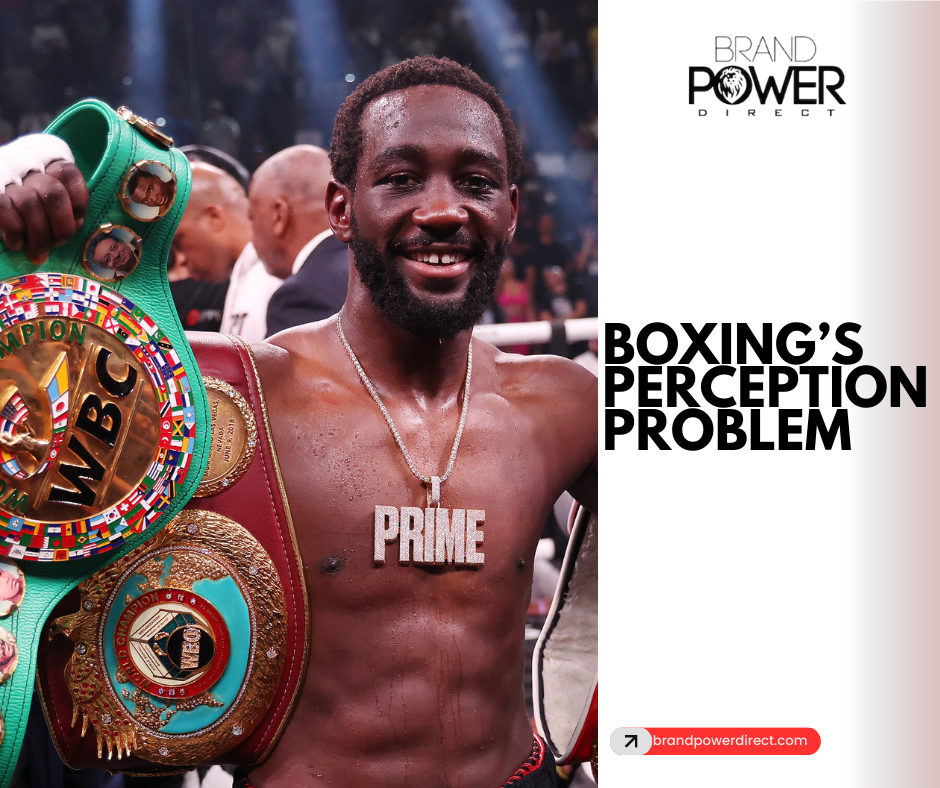
When Crawford was stripped of the WBC belt over unpaid sanctioning fees, reportedly around $300,000, plus additional fees from prior fights, the headlines focused on the drama. But the real story lives underneath: boxing’s consumer loyalty is eroding because the sport’s brand is unpredictability.
Not unpredictability in the sporting sense — styles make fights, anyone can get knocked out.
But unpredictability in the business sense. Rules change. Belts disappear. Champions vanish on technicalities. Fights take years to materialize, if they happen at all.
That’s not intrigue. That’s confusion.
The Ring Magazine Belt vs. the Belt Economy
Let’s ground this in truth.
Terence Crawford is a three-time undisputed champion and the holder of the Ring Magazine belt, which in boxing means one thing: you beat the man who beat the man. No politics. No fees. No backroom maneuvering.
It’s boxing’s cleanest signal of supremacy.
So when a fighter who has already conquered his division is told he must pay hundreds of thousands of dollars to retain a separate belt, the question becomes unavoidable:
Is this about legitimacy or revenue extraction?
At that point, championships stop being earned, they’re rented.
Boxing’s Loyalty Problem: The Brand Is Chaos
Here’s the uncomfortable truth boxing has avoided for decades:
Fans don’t trust the system.
They don’t know:
Who the real champion is
When the best fighters will actually fight
Whether a belt means dominance or paperwork
That lack of clarity erodes loyalty. A brand built on unpredictability may create short-term buzz, but it destroys long-term confidence. Fans want tension inside the ropes, not confusion outside of them. And when Crawford publicly exposes the WBC’s fee structure, it doesn’t just hurt one sanctioning body. It adds more tinsel to an already burning dumpster fire of perception.
The Long Shadow of the Don King Era
Boxing is still paying for its past.
The Don King era normalized:
Unscrupulous contracts
Conflicts of interest
Fighters being steered away from risky but necessary matchups
Champions aging out while fans waited for “the right time”
Too many great fights happened too late or never at all. That legacy trained fans to expect manipulation instead of merit. And once trust is broken, it doesn’t regenerate on its own. Crawford calling out the WBC hits differently because it feels familiar — another chapter in a long story of opaque power dynamics.
Why This Moment Matters More Than Ever
Crawford’s transparency arrives at a fragile time for boxing.
Pay-per-view, once boxing’s financial backbone, is now a hard proposition. Fans can watch premium fights bundled inside streaming subscriptions. Attention is fragmented. Loyalty is conditional.
In this environment, boxing cannot afford confusion.
When leaders like Turki Al-Sheikh and Dana White talk about unification and centralization, they aren’t just discussing governance — they’re responding to consumer fatigue. The audience wants:
Clear champions
Predictable pathways
Fights that happen in their prime
And systems that make sense.
Transparency Is Boxing’s Only Way Forward
Boxing doesn’t need more belts.
It needs more trust.
Transparency isn’t a luxury anymore — it’s survival.
Fans will forgive losses.
They will forgive rivalries.
They will forgive controversial decisions.
What they won’t forgive is feeling manipulated.
Crawford didn’t lose credibility when he was stripped.
He gained it.
Because in a sport still healing from decades of questionable leadership, honesty feels radical.
The Washed Strategist Take
Boxing’s biggest opponent isn’t MMA, streaming platforms, or even other sports.
It’s its own perception.
When the sport looks unpredictable, opaque, and self-serving, consumers disengage — not loudly, but quietly. And quiet disengagement is the most dangerous kind.
If boxing wants to survive the next era, it must replace chaos with clarity, politics with transparency, and nostalgia with reform.
Because fans don’t just pay for fights.
They pay for belief.
And right now, belief is what boxing is fighting hardest to win back.
— The Washed Strategist
Aging like fine brand equity.