
50 Cent Isn’t Petty He’s Practicing Power Exactly as Designed
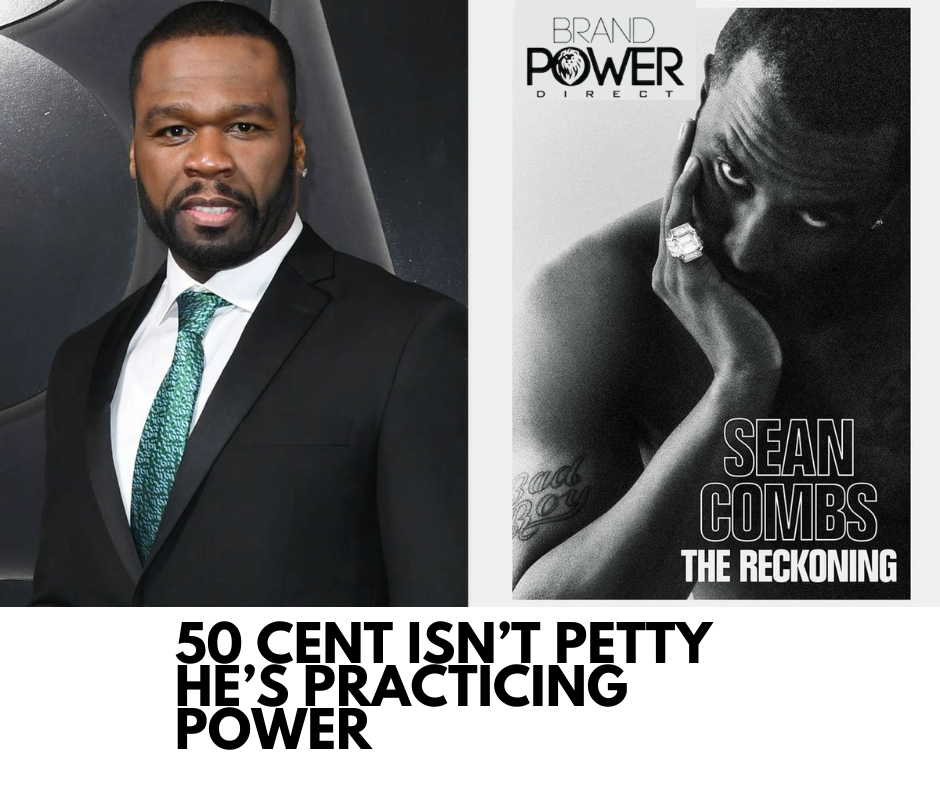
People keep asking the wrong questions about Curtis “50 Cent” Jackson.
Is he petty? Is he obsessed with beef? Is he opportunistic? Is this all personal?
Ever since the release of the perfectly timed Netflix docu-series “Sean Combs: The Reckoning,” the culture wants to know if the project is another rung in a personal smear campaign by Jackson or simply a business asset. The questions are valid as Jackson has made dethroning hip hop artists and moguls part of his brand DNA. Couple that with the allegation that the Jane Doe who testified in Combs RICO case is also the mother of Jackson’s youngest child and you have the perfect cauldron of reason to kick Combs while he is federally down.
However, those questions miss the point entirely.
Curtis Jackson didn’t take the name 50 Cent for branding flair. He took the name of a notorious Brooklyn stick-up kid as a declaration of intent. In his own mythology, 50 Cent exists to rob you, not of money, but of position, perception, and power.
And he’s been doing it consistently for over two decades.
From Ja Rule to Diddy, this is the Fiddy pattern, not a phase. Let’s start with what everyone pretends not to notice: Ja Rule wasn’t just defeated musically, he was culturally erased. Long before Kendrick Lamar surgically dismantled Drake’s perception with “They Not Like Us,” 50 Cent mastered public dethroning. Ja didn’t lose because of one song. He lost because 50 attacked the idea of Ja Rule until the audience stopped believing in him.
That wasn’t beef.
That was brand demolition.
Fast forward to today, and the same template is visible in 50’s involvement in a docu-series examining Sean Combs’ career and alleged long-term patterns of behavior. Once again, the question isn’t whether the revelations are uncomfortable — it’s why 50 keeps positioning himself as the one to tell these stories.
Is he a genius or is he settling scores? The truth is more unsettling: he doesn’t care which one you believe. In the 48 Laws of Power by Robert Greene, one of the books 50 proclaims inspired his strategic nature, there is one rule that he values above all others: Law 15: Crush Your Enemy Totally.
The law is simple and brutal: if you leave your enemy with even a shred of power, they will eventually seek revenge. So when you strike, you strike in a way that leaves no room for recovery. This isn’t emotional but it is strategic and Jackson didn’t just read Greene, he collaborated with him on The 50th Law, a manifesto celebrating fearlessness as a competitive advantage.
Fearlessness, in this context, doesn’t mean recklessness. It means acting without concern for being liked, forgiven, or misunderstood and that explains everything. Genius or Vendetta? That question is a distraction and many observers are stuck debating whether 50’s moves are opportunistic or personal.
That debate is irrelevant because power doesn’t care about motive — only outcome.
50 doesn’t see himself as destroying people. He sees himself as translating culture for an audience that loves to cosplay crime, punishment, and dominance from the safety of entertainment. He exposes what people glamorize but refuse to interrogate.
The fallen kings like Irving “Irv Gotti” Lorenzo, former CEO of Murder Inc., Damon “Dame” Dash, former CEO of Rocafella Records and now Sean “P. Diddy” Combs are collateral damage. Their perceived demise is a public spectacle of 50 Cent’s mastery of Robert Greene’s manipulative theories and the real product is the uncomfortable racial undertone of fame, crime and punishment dissolution through Jackson’s incessant social media posting and mass media positioning.
There is an unavoidable tension in all of this as many of 50 Cent’s highest-profile targets are Black men who reached rarefied levels of commercial power in hip-hop. That discomfort fuels criticism that he is tearing down Black leadership rather than protecting it. But capitalism doesn’t recognize racial solidarity — only leverage.
This is the hardest truth to sit with: the system rewards whoever understands it best, not whoever behaves most ethically within it. 50 plays the game as it exists, not as people wish it would be. That doesn’t make him righteous but it makes him effective.
Capitalism’s oldest rule: take no prisoners.
Strip away the celebrity and the spectacle, and one brutal truth remains: Capitalism is not a moral system. It is a competitive one. In capitalism, mercy is optional but dominance is not. 50 Cent’s worldview is brutally consistent with that reality. When money, attention, and narrative control are at stake, you do not leave space for rivals to recover. You do not allow competing myths to coexist with your own. You do not wait for fairness instead you move first, loudly and decisively.
The Washed Strategist Take
Here’s the polarizing conclusion people resist:
50 Cent isn’t an anomaly, he’s a mirror exposing how power actually works in entertainment, business, and culture. The discomfort people feel watching him operate isn’t about his tactics, it’s about realizing that this is how the game has always been played, just usually behind closed doors.
He doesn’t ask for permission, seek consensus or apologize for understanding leverage better than most. Whether you admire him or despise him is irrelevant because the lesson is clear: When it comes to power, perception, and money, you don’t take prisoners.
You get rich… or you get replaced.
— The Washed Strategist
Aging like fine brand equity.