
The Experiential Imperative: Why Physical Brand Engagement Is the New Competitive Frontier
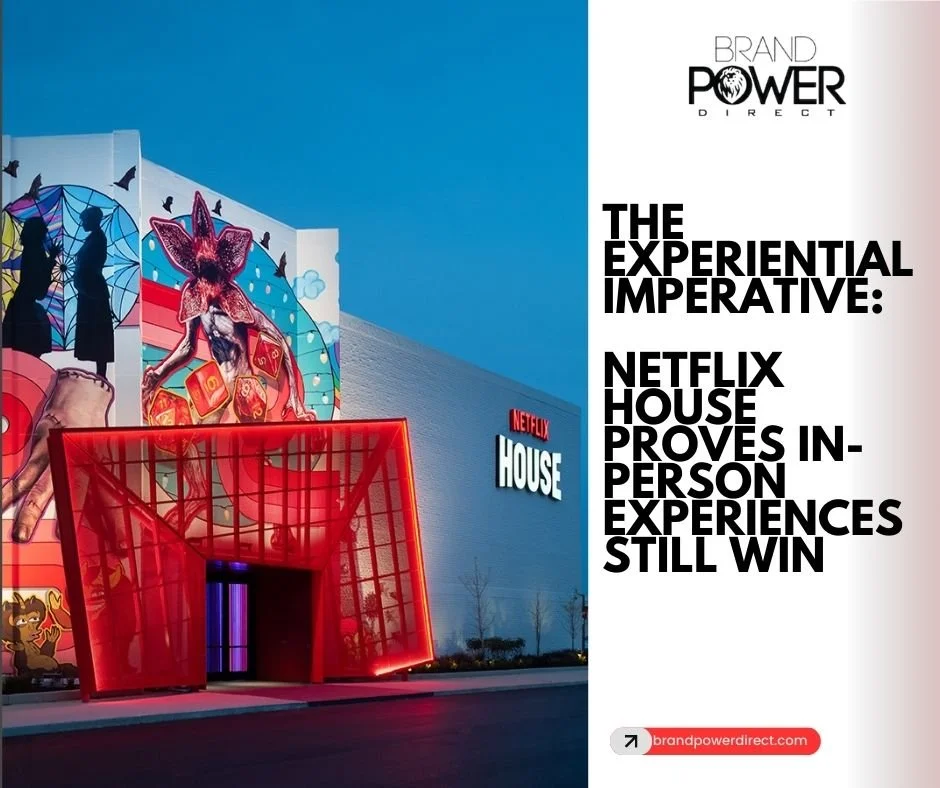
Netflix is transforming the experiential concept with unique mid-tier offerings
The business world spent the last two decades racing toward digital transformation. Every consultant, every conference, every quarterly earnings call hammered the same message: digitize or die. Companies scrambled to build websites, launch apps, optimize e-commerce, and dominate social feeds.
That race is over. Not because digital lost—but because it won.
Digital ubiquity has created a new problem: when everything exists online, nothing stands out. The pendulum is swinging back, but not backward. We're entering the post-digital era, where the most sophisticated brands understand that physical experience isn't the opposite of digital strategy—it's the completion of it.
(Psst: I explain more insights on my Youtube channel. Watch Video HERE)
Netflix's Strategic Masterclass
Netflix House represents more than corporate experimentation. It's a blueprint for the future of brand architecture.
By transforming streaming content into physical destinations in Philadelphia and Dallas, Netflix has decoded a fundamental truth about modern consumer psychology: we consume content digitally, but we form memories physically. The company that disrupted entertainment by keeping us home is now giving us reasons to leave.
This isn't contradiction—it's sophistication. Netflix recognized that its intellectual property had transcended screens to become cultural currency. Netflix House doesn't just monetize that currency; it compounds it. Fans don't just watch Stranger Things anymore—they step into the Upside Down. They don't just binge Bridgerton—they attend the ball.
The strategic genius lies in the model's scalability and repeatability. These aren't billion-dollar theme parks requiring decade-long development cycles. They're modular, updatable experiences that can evolve with Netflix's content library.
The Middle-Market Revolution
While Netflix captures headlines, a quieter revolution is reshaping consumer expectations across every industry. The new experiential economy operates in what we call the "accessible extraordinary"—experiences that deliver transformation without requiring transformation-level investment.
Consider the economics:
Duration: 2-4 hours versus days
Investment: $50-500 versus thousands
Frequency: Monthly versus annually
Distance: Neighborhood versus destination
This isn't about replacing vacations or special occasions. It's about elevating ordinary Tuesday nights. Interactive art installations, immersive dining concepts, branded discovery centers, participatory retail environments—these experiences occupy the white space between routine consumption and luxury escapism.
The data supports this shift. Consumers increasingly value experiences over possessions, but economic reality constrains their choices. The middle-market experiential layer solves this tension by making memorable accessible.
The Strategic Opportunity Most Brands Miss
Here's where traditional thinking fails: most businesses still view experiential marketing as a cost center—a necessary evil to drive "real" sales. They launch pop-ups as promotional vehicles. They host events as lead generation. They create experiences as advertisements.
This is precisely backward.
In the attention economy, experience is the product. The physical encounter isn't driving digital engagement—it's completing it. Smart brands recognize that experiential layers don't support the core business; they expand it.
Consider the multiplier effects:
Revenue Diversification: Physical experiences create new SKUs from existing IP. A fashion brand becomes a style destination. A food company becomes a culinary journey. A tech platform becomes a discovery center.
Community Architecture: Digital platforms create users; physical spaces create tribes. The difference between a customer and a community member is the difference between a transaction and a relationship.
Competitive Moats: Anyone can copy your product. Few can replicate your experience. In markets where differentiation increasingly depends on intangibles, experiential layers create defendable positions.
Premium Positioning: Experiences command premium pricing because they deliver premium value—time, attention, memory, story. Brands that exist only in two dimensions leave money in the third.
The Implementation Framework
Creating meaningful experiential layers doesn't require infinite resources. It requires strategic clarity:
Identify Your Narrative Assets: What stories does your brand already own? What emotions do you already evoke? Your experiential layer should amplify existing brand equity, not invent it.
Design for Documentation: Modern experiences must be both lived and shared. Every touchpoint should create content opportunities without feeling performative.
Build Modular, Not Monolithic: Start with temporary. Test with pop-up. Scale with data. The best experiential strategies grow organically from proven concepts.
Measure Beyond Traffic: Traditional metrics miss the point. Track sentiment, storytelling, return rates, and referral quality. The value of experience compounds over time.
The Competitive Reality
The question isn't whether to develop experiential capabilities—it's whether to lead or follow.
Early movers will define categories. They'll own the intersection between their digital presence and physical expression. They'll transform customers into participants, participants into advocates, and advocates into co-creators. Late adopters will compete on price and features in an increasingly commoditized digital marketplace, wondering why engagement metrics decline while acquisition costs soar.
The choice is binary, but the opportunity is exponential.
The New Business Imperative
We've moved beyond the experience economy into the experiential imperative. Brands that exist only in pixels are incomplete. Products without experiences are commodities. Services without stories are forgettable.
The most successful businesses of the next decade won't just sell to customers, they'll immerse them. They won't just deliver value, they'll create memories. They won't just occupy digital space, they'll design physical moments worth sharing.
This isn't about abandoning digital excellence. It's about recognizing that digital excellence alone is table stakes. The new competitive advantage lies in dimensional thinking—creating brands that customers don't just use, but inhabit. The infrastructure exists. The consumer appetite is proven. The only question remaining is execution.
Welcome to the dimensional economy. Your customers are already there, waiting for you to join them.